
In 2007 KETAAKETI SPOWC launched its first microfinance projects in Kathmandu. The core idea behind these programs (developed by KETAAKETI) is to enable and empower women to build sustainable livelihoods by providing them with loans to start small businesses (e.g., pig farming, chicken farming, vegetable farming, or small retail shops). This initiative not only allows women to support their families but also enables them to do so independently and self-determinedly, while preserving their dignity and pride.
How it works?
SPOWC collaborates with regional cooperation . They select groups of 10 women (and increasingly men) who each receive 10.00 rupees in interest-free microfinance to implement their business ideas.
The criteria for selecting participants include need, strong motivation, and a viable business idea. Each participant decides independently based on her abilities and the opportunities available to her. The women receive comprehensive training and support.
Through the interest-free repayment and redistribution of the invested amount after approximately 12 months to the next group of women, a strong network of solidarity is created within the village community and beyond. The development continues, spreading from village to village, leading to self-sufficiency and independence.
In addition, this initiative strengthens the bond between educated children and their illiterate parents. As of March 2024, over 2,600 families in Nepal are living self-sufficiently with the help of microfinance.
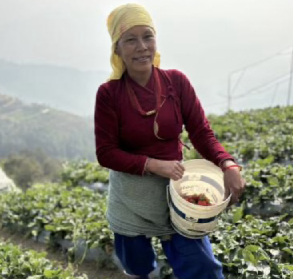
Surjay received €100 in interest-free microfinance and invested it in purchasing strawberry seeds. Her courage and trust in an unfamiliar crop allowed her to stand out in the market, differentiate herself from traditional farming like rice or corn, and thereby increase her insufficient income. After just 6 months, she was able to pass the money on to another woman in the village.
Being able to work independently gives me so much freedom, and I am so grateful for this opportunity. I don't have to ask my husband for money, take out a loan, or rely on anyone else; I can take care of myself and my family.

Kamala invests her microfinance loan in agriculture and livestock. With the income, she is able to cover household expenses and support her children's education. After 12 months, she passes the money on to the next woman.
My life has improved. We women are receiving help, and all of this has helped us strengthen our self-confidence. It means a lot to us. We are very happy.
Gyani Dong buys a cow with €100 and additional personal funds. The cow produces 10 liters of milk per day, and she earns well from it, allowing her to pass on the original €100 after three months. With the earnings, she can pay the enrollment fees for her daughter’s studies in civil engineering and her son’s studies in hotel management.
Renuka Saptoka buys fertilizer for her potato fields with €100. This allows for a higher crop yield and increased income. After just 6 months, she is able to pass the money on to the next woman. With her higher income, she can afford to carry out repairs on her house.
As individuals, our income is not enough to cover our living expenses. The microfinance was a financial relief for us.